Browse through the top 10 list of 2011 for the Best Science Colleges in India.
 The annual India Today survey results for the best colleges in the country for 2011 were declared last week. More than 1500 colleges had participated in the survey which ranked institutions stream-wise offering courses in arts, science, commerce, engineering, medicine and law.
The institutions were assessed for the following parameters:
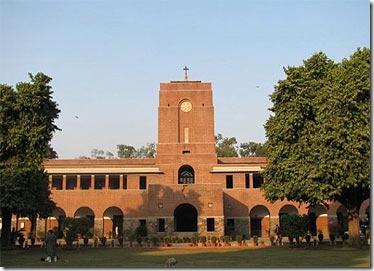 Maintaining the top spot is St. Stephen's College, Delhi.
Founded by Rev Samuel Scott Allnutt, on 1 February 1881, St. Stephen's is the oldest college in Delhi.
The College commenced its academic journey with just five student and three teachers in a small house in Chandni Chowk. Since then, it has shifted its location thrice and is currently located in the university Enclave.
The college was known as one of the premier institutions offering degrees in liberal arts and science in the country.
While its founder members were not only great academicians, they were also active participants and contributed greatly to the cause of the nation.
Today, they cater to undergraduate and post graduate students besides offering all round development by initiating activities and dedicated student societies in debating, dramatics, mountaineering, film and music appreciation, social service, photography, electronics and astronomy.
 On second spot is Loyola College, Chennai
Founded in 1925, with an aim to provide university education to the Catholic Community, the college is known for its high academic standards and quality education in the city.
Although the college continues to be affiliated to the University of Madras, it functions as an autonomous body since July 1978.
It has a 100-acre campus and is conveniently located in the heart of the city.
There are 18 departments (for Arts, Commerce and Science) and 9 special Institutes offering more than 111 programs to over 10,000 students. It has 10 departments offering M.Phil programs and 14 departments that offer Ph.D programs.
Over 114 teaching staff members out of 277, hold doctoral degree.
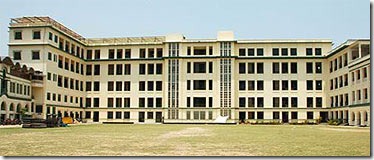 Moving two places up from last year is St. Xavier's College, Kolkata.
Named after St. Francis Xavier, a Jesuit saint of the 16th century, who travelled to India, St. Xavier's College was founded in 1860 with just 40 students.
It is an autonomous college affiliated to the University of Calcutta.
After gaining autonomous status in July 2006, it also came to be known as the first autonomous college of West Bengal, India.
The College offers UG and PG Courses under five faculties, namely Arts, Science, Commerce, Business Administration and Education and has close to 5000 students under its roll.
The college also owns the credit for having a commemorative stamp depicting the college campus issued by the Indian Post in its name.
 Fourth on the list is Miranda House, New Delhi which was on the eighth position last year.
A residential college for women, Miranda House is also regarded as one of the premier women's institutions of Delhi University.
It was founded in 1948 by the then Vice-Chancellor Sir Maurice Gwyer with a student strength of 33.
Today, the college offers undergraduate and post graduate courses across 16 academic departments in liberal arts and science to more than 2,500 students.
The college building which was designed by renowned architect Walter Sykes George was recently declared as a heritage building.
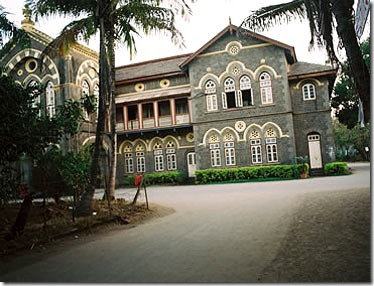 Sharing the fifth spot this year is Fergusson College, Pune
The college got its name on January 2, 1885, to acknowledge the efforts of Sir James Fergusson, the first patron of the Deccan Education Society who strived towards the formation of the college. The college was inaugurated by William Wordsworth, the grandson of the famous English poet.
Starting with Arts in its inception days, in 1892, it commenced offering courses in Science and since then has maintained high standards of education.
The college is located in the heart of the city, has a sprawling campus and caters to the many needs of the 5,500-odd student community from sports, games and cultural facilities.
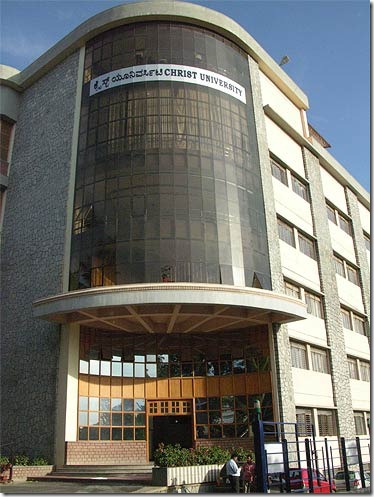 Improving its position by one rank from last year is Christ University, Bangalore.
Also known popularly as Christ College, the Christ University was established in July 1969.
It has the rare distinction to be the first institution in Karnataka to be accredited by National Assessment and Accreditation Council (NAAC) UGC for quality education.
Spread over a 25 acre campus, the Christ University was granted the deemed university status in 2008.
Today, the college has over 2000 students enrolled in its science stream and offers integrated programmes in physics, maths, chemistry, biology and electronics.
Besides, it also offers courses in Law, Business Administration, Commerce, Management, Humanities, and Social Sciences.
Among the professional ones, it offers courses in Business Management, Computer Application, Hotel Management, Mass Communication, Social Work, Engineering and Tourism.
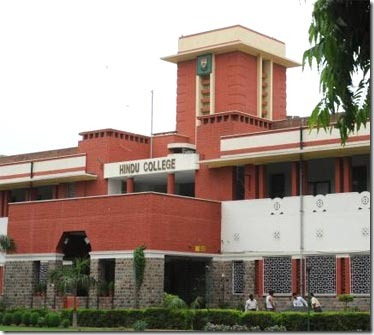 Appraising its position from thirteenth spot last year is Hindu College, Delhi.
Established in 1899, the Hindu College, Delhi is one of the oldest and profound colleges of the country.
An active participant of the freedom struggle movement, the college is known for its academic excellence across science, arts and commerce.
Spread over 25 acres of land, the college has over 15 departments offering undergraduate and graduate courses to over 2000 students annually.
It is ably supported by a strong academic and non-teaching staff.
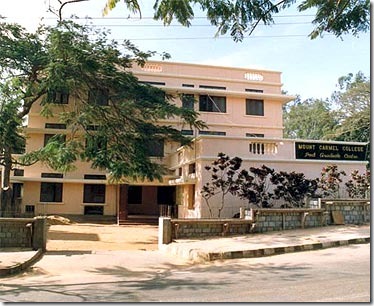 It's a commendable achievement for Mount Carmel College, Bangalore which featured on the sixteenth position last year.
Since it was established on July 7, 1948, roughly a year after independence with just 50 students on its rolls, which dwindled to 32, by the end of the year owing to lack of proper infrastructure, the college has certainly come a long way.
Today it has a beautiful campus, large buildings and caters to over 4,000 students in the country.
It is the first woman's college in Karnataka and also the first all women college to start courses in PGDBA.
It has five departments, namely arts, science, home science, commerce and post graduate studies which specifically look into the academic and social needs of students.
 Also moving up the ladder from its 12th spot last year is St. Joseph's College, Bangalore.
Founded in 1882, St St. Joseph's College, Bangalore is one of the oldest colleges in Karnataka, India.
After it was declared an autonomous college in 2005, it started offering integrated courses in science, commerce and arts to students.
It has student strength of over 5000 students ably attended by a faculty of about 150 members.
 Sliding down from its ninth position last year is Hansraj College, Delhi.
The college came into being on July 1948, with student strength of 313 members.
Hansraj College is known for its large classrooms and extensive playfields, and boasts of a sports complex, an air conditioned electronic shooting range, well-equipped laboratories, a spacious library and hostel facilities among others.
It has nearly 15 academic departments and faculty of 85 members
The annual India Today survey results for the best colleges in the country for 2011 were declared last week. More than 1500 colleges had participated in the survey which ranked institutions stream-wise offering courses in arts, science, commerce, engineering, medicine and law. The institutions were assessed for the following parameters:
- Reputation
- Academic Input
- Student Care
- Infrastructure
- Placement
- Perceptual Rank
- Factual Rank
Top 10 science colleges in India >>
1. St Stephen's College, Delhi
 Maintaining the top spot is St. Stephen's College, Delhi.
Founded by Rev Samuel Scott Allnutt, on 1 February 1881, St. Stephen's is the oldest college in Delhi.
The College commenced its academic journey with just five student and three teachers in a small house in Chandni Chowk. Since then, it has shifted its location thrice and is currently located in the university Enclave.
The college was known as one of the premier institutions offering degrees in liberal arts and science in the country.
While its founder members were not only great academicians, they were also active participants and contributed greatly to the cause of the nation.
Today, they cater to undergraduate and post graduate students besides offering all round development by initiating activities and dedicated student societies in debating, dramatics, mountaineering, film and music appreciation, social service, photography, electronics and astronomy.
2. Loyola College, Chennai
 On second spot is Loyola College, Chennai
Founded in 1925, with an aim to provide university education to the Catholic Community, the college is known for its high academic standards and quality education in the city.
Although the college continues to be affiliated to the University of Madras, it functions as an autonomous body since July 1978.
It has a 100-acre campus and is conveniently located in the heart of the city.
There are 18 departments (for Arts, Commerce and Science) and 9 special Institutes offering more than 111 programs to over 10,000 students. It has 10 departments offering M.Phil programs and 14 departments that offer Ph.D programs.
Over 114 teaching staff members out of 277, hold doctoral degree.
3. St. Xavier's College, Kolkata
 Moving two places up from last year is St. Xavier's College, Kolkata.
Named after St. Francis Xavier, a Jesuit saint of the 16th century, who travelled to India, St. Xavier's College was founded in 1860 with just 40 students.
It is an autonomous college affiliated to the University of Calcutta.
After gaining autonomous status in July 2006, it also came to be known as the first autonomous college of West Bengal, India.
The College offers UG and PG Courses under five faculties, namely Arts, Science, Commerce, Business Administration and Education and has close to 5000 students under its roll.
The college also owns the credit for having a commemorative stamp depicting the college campus issued by the Indian Post in its name.
4. Miranda House, New Delhi
 Fourth on the list is Miranda House, New Delhi which was on the eighth position last year.
A residential college for women, Miranda House is also regarded as one of the premier women's institutions of Delhi University.
It was founded in 1948 by the then Vice-Chancellor Sir Maurice Gwyer with a student strength of 33.
Today, the college offers undergraduate and post graduate courses across 16 academic departments in liberal arts and science to more than 2,500 students.
The college building which was designed by renowned architect Walter Sykes George was recently declared as a heritage building.
5. Fergusson College, Pune
Sharing the fifth spot this year is Fergusson College, PuneThe college got its name on January 2, 1885, to acknowledge the efforts of Sir James Fergusson, the first patron of the Deccan Education Society who strived towards the formation of the college. The college was inaugurated by William Wordsworth, the grandson of the famous English poet.
Starting with Arts in its inception days, in 1892, it commenced offering courses in Science and since then has maintained high standards of education.
The college is located in the heart of the city, has a sprawling campus and caters to the many needs of the 5,500-odd student community from sports, games and cultural facilities.
6. Christ University, Bangalore
 Improving its position by one rank from last year is Christ University, Bangalore.
Also known popularly as Christ College, the Christ University was established in July 1969.
It has the rare distinction to be the first institution in Karnataka to be accredited by National Assessment and Accreditation Council (NAAC) UGC for quality education.
Spread over a 25 acre campus, the Christ University was granted the deemed university status in 2008.
Today, the college has over 2000 students enrolled in its science stream and offers integrated programmes in physics, maths, chemistry, biology and electronics.
Besides, it also offers courses in Law, Business Administration, Commerce, Management, Humanities, and Social Sciences.
Among the professional ones, it offers courses in Business Management, Computer Application, Hotel Management, Mass Communication, Social Work, Engineering and Tourism.
7. Hindu College, Delhi
 Appraising its position from thirteenth spot last year is Hindu College, Delhi.
Established in 1899, the Hindu College, Delhi is one of the oldest and profound colleges of the country.
An active participant of the freedom struggle movement, the college is known for its academic excellence across science, arts and commerce.
Spread over 25 acres of land, the college has over 15 departments offering undergraduate and graduate courses to over 2000 students annually.
It is ably supported by a strong academic and non-teaching staff.
8. Mount Carmel College, Bangalore
 It's a commendable achievement for Mount Carmel College, Bangalore which featured on the sixteenth position last year.
Since it was established on July 7, 1948, roughly a year after independence with just 50 students on its rolls, which dwindled to 32, by the end of the year owing to lack of proper infrastructure, the college has certainly come a long way.
Today it has a beautiful campus, large buildings and caters to over 4,000 students in the country.
It is the first woman's college in Karnataka and also the first all women college to start courses in PGDBA.
It has five departments, namely arts, science, home science, commerce and post graduate studies which specifically look into the academic and social needs of students.
9. St. Joseph's College, Bangalore
 Also moving up the ladder from its 12th spot last year is St. Joseph's College, Bangalore.
Founded in 1882, St St. Joseph's College, Bangalore is one of the oldest colleges in Karnataka, India.
After it was declared an autonomous college in 2005, it started offering integrated courses in science, commerce and arts to students.
It has student strength of over 5000 students ably attended by a faculty of about 150 members.
10. Hansraj College, Delhi
Sliding down from its ninth position last year is Hansraj College, Delhi.The college came into being on July 1948, with student strength of 313 members.
Hansraj College is known for its large classrooms and extensive playfields, and boasts of a sports complex, an air conditioned electronic shooting range, well-equipped laboratories, a spacious library and hostel facilities among others.
It has nearly 15 academic departments and faculty of 85 members


